Title IX Regulatory Adjustments 2026: University Department Guide
Anúncios
Latest developments on Title IX Regulatory Adjustments in 2026: What University Academic Departments Must Implement, with key facts, verified sources and what readers need to monitor next in Estados Unidos, presented clearly in Inglês (Estados Unidos) (en-US).
Title IX Regulatory Adjustments in 2026: What University Academic Departments Must Implement is shaping today’s agenda with new details released by officials and industry sources. This update prioritizes what changed, why it matters and what to watch next, in a straightforward news format.
The impending changes to Title IX are not merely administrative; they represent a significant evolution in how educational institutions address sex-based discrimination. Academic departments, often at the forefront of student and faculty interactions, must understand the depth of these new mandates.
Understanding the Scope of Title IX Regulatory Adjustments in 2026
The Department of Education has outlined comprehensive changes impacting how universities must respond to allegations of sex discrimination, including sexual harassment and assault. These adjustments are designed to ensure clearer protections and more equitable processes for all parties involved.

These regulations aim to strike a balance between safeguarding victims and ensuring due process for accused individuals. University academic departments will play a crucial role in implementing these policies, from prevention education to response protocols.
Anúncios
The directives emphasize a proactive approach, requiring institutions to not only react to incidents but also to actively prevent them through education and policy enforcement. This shift necessitates a re-evaluation of current practices within every academic unit.
Key Policy Shifts and Their Implications
The new regulations introduce several critical policy shifts that academic departments must internalize. These include changes to definitions of sexual harassment, jurisdiction over incidents, and the investigative and adjudicatory processes.
Academic departments must understand that these changes are not optional; they are federal mandates carrying significant compliance obligations. Failure to adhere can result in severe penalties, including loss of federal funding.
For instance, the definition of sexual harassment has been broadened to align more closely with civil rights standards, requiring a more encompassing response from institutions. This expanded scope will require updated training and awareness campaigns.
- Expanded definition of sexual harassment.
- Changes in jurisdiction for off-campus incidents.
- Updated requirements for live hearings and cross-examination.
- Mandatory training for all Title IX personnel.
The updated guidelines also clarify the roles and responsibilities of Title IX coordinators and investigators, emphasizing their independence and training. Academic departments will need to collaborate closely with these offices.
Impact on University Academic Departments and Operations
The Title IX Regulatory Adjustments in 2026: What University Academic Departments Must Implement will necessitate significant operational adjustments across all academic units. This includes revisiting departmental handbooks, training faculty and staff, and updating curricula where relevant.
Departments must assess how their current practices align with the new regulations, particularly in areas like student conduct, faculty hiring, and research integrity. Proactive auditing can help identify potential gaps before issues arise.
Anúncios
The changes extend beyond legal compliance, influencing departmental culture and fostering a safer, more inclusive environment. This cultural shift requires leadership from department chairs and active participation from all members.
Revised Reporting and Grievance Procedures
Academic departments will need to be fully aware of the revised reporting and grievance procedures. This includes understanding who is a mandatory reporter, how to properly receive disclosures, and the steps involved in initiating a formal complaint.
Faculty and staff often serve as the first point of contact for students experiencing issues, making their understanding of these procedures paramount. Missteps in reporting can have serious consequences for both individuals and the institution.
The new rules also emphasize prompt and equitable resolution processes, which means departments must be prepared to act swiftly and appropriately when incidents are reported. Timeliness is a critical component of compliance.
- Clear guidelines for mandatory reporters.
- Protocols for receiving and documenting disclosures.
- Understanding the formal complaint process.
- Emphasis on prompt and equitable resolution.
Departments must also ensure that students and employees are fully informed about their rights and the available resources under Title IX. This includes accessible information about support services, counseling, and legal aid.
Training and Education Requirements for Faculty and Staff
A cornerstone of the Title IX Regulatory Adjustments in 2026: What University Academic Departments Must Implement is the enhanced focus on training and education. All faculty, staff, and administrators within academic departments will be required to undergo comprehensive training.
This training will cover the new definitions, reporting obligations, and the institution's revised grievance procedures. It aims to equip individuals with the knowledge and skills to prevent and respond to sex-based discrimination effectively.
The Department of Education mandates that this training be ongoing and regularly updated to reflect any further interpretations or amendments to the regulations. Compliance is an evolving process, not a one-time event.
Developing Department-Specific Training Modules
While university-wide training will provide a foundational understanding, academic departments may benefit from developing department-specific training modules. These can address unique challenges or scenarios pertinent to their discipline or student population.
For example, departments with field research components might need specialized training on ensuring Title IX compliance in off-campus settings. Creative arts departments might focus on issues related to creative expression and harassment.
Tailored training ensures relevance and increases engagement, leading to a deeper understanding and better application of Title IX principles. This localized approach can strengthen overall institutional compliance efforts.
- Mandatory general Title IX training for all personnel.
- Consideration of department-specific training needs.
- Regular updates and refreshers for all training programs.
- Focus on practical application within departmental contexts.
Investing in robust training programs is not just about meeting compliance; it's about fostering a culture of respect and accountability within each academic department. This proactive stance protects both students and employees.
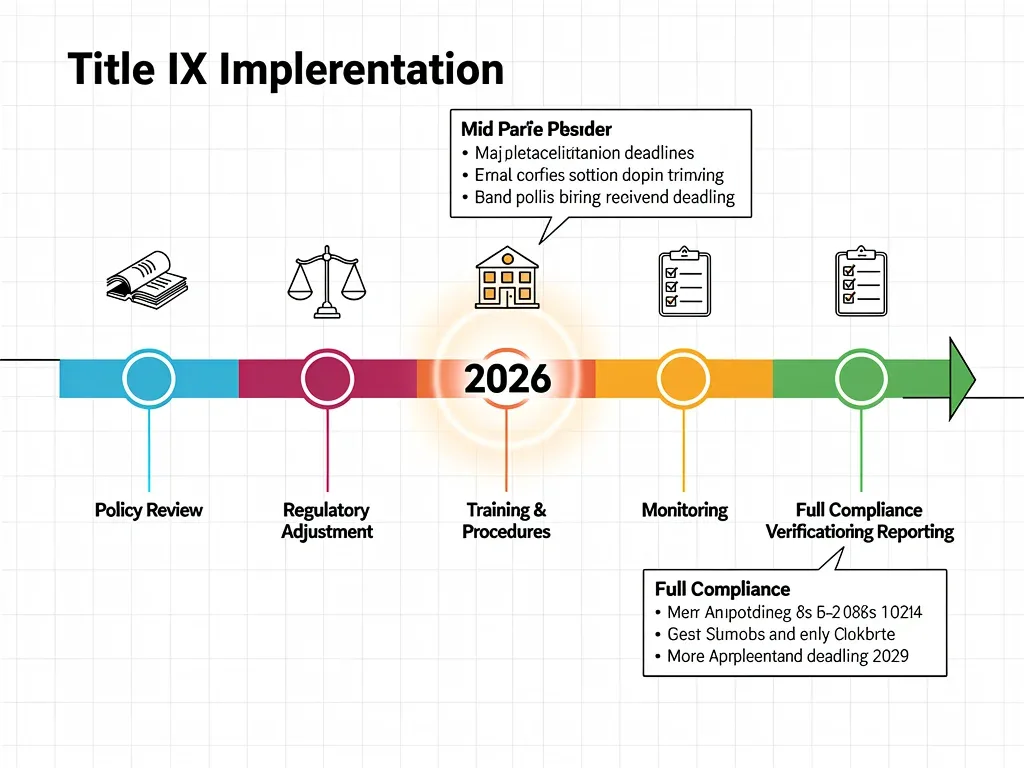
The timeline for these changes is critical, with 2026 serving as a pivotal year for full implementation. Academic leaders must begin planning immediately to ensure their departments are ready.
Resource Allocation and Budgetary Considerations
Implementing the Title IX Regulatory Adjustments in 2026: What University Academic Departments Must Implement will undoubtedly require significant resource allocation. This includes financial investment in training, personnel, and potentially new technological infrastructure.
Academic departments should begin assessing their current budgets and identifying areas where additional funding might be needed. This could involve requesting increased allocations from central university administration or reallocating existing resources.
Beyond financial aspects, resource allocation also pertains to personnel. Departments may need to designate specific individuals to oversee compliance efforts, serve as liaisons with the Title IX office, or provide direct support to students and faculty.
Investing in Technology and Support Systems
The new regulations may necessitate investments in technology to streamline reporting, case management, and record-keeping. Robust and secure systems are essential for maintaining confidentiality and ensuring data integrity.
Departments should explore software solutions that can assist with tracking training completion, managing incident reports, and providing accessible resources. Digital platforms can significantly enhance efficiency and compliance.
Furthermore, adequate support systems for individuals involved in Title IX processes are crucial. This includes access to mental health services, academic accommodations, and legal advisement, all of which may require departmental coordination.
- Budgeting for mandatory training programs.
- Allocating resources for new compliance personnel.
- Investing in secure technology for reporting and case management.
- Ensuring robust support systems for all parties involved.
Proactive planning for these resource needs can prevent last-minute scrambling and ensure a smoother transition to the new regulatory environment. Early engagement with university leadership on these matters is advisable.
Preventative Measures and Cultural Shifts
Beyond reactive measures, the Title IX Regulatory Adjustments in 2026: What University Academic Departments Must Implement emphasize preventative strategies and fostering a culture of respect. Academic departments are uniquely positioned to lead these efforts.
This involves promoting clear communication about behavioral expectations, integrating discussions about consent and respect into relevant curricula, and creating an environment where individuals feel safe to report concerns without fear of retaliation.
Departmental leadership plays a vital role in modeling appropriate behavior and reinforcing the institution's commitment to Title IX principles. A strong, positive departmental culture can significantly reduce incidents of discrimination.
Promoting Bystander Intervention and Allyship
Academic departments can actively promote bystander intervention programs, empowering students and faculty to intervene safely when they witness potentially harmful behavior. These programs can be integrated into orientations or regular departmental meetings.
Cultivating allyship is another powerful preventative measure. Encouraging individuals to support and advocate for those who experience discrimination creates a stronger, more resilient community.
These initiatives move beyond mere compliance, embedding Title IX principles into the fabric of daily departmental life. They foster a sense of shared responsibility for maintaining a safe and equitable environment for everyone.
- Integrating discussions on consent and respect into curricula.
- Promoting clear behavioral expectations within the department.
- Implementing bystander intervention programs.
- Cultivating a culture of allyship and support.
A proactive approach to prevention not only minimizes the likelihood of Title IX violations but also enhances the overall academic and social experience for students and faculty. It's an investment in the department's future.
Collaboration with University-Wide Title IX Office
Effective implementation of Title IX Regulatory Adjustments in 2026: What University Academic Departments Must Implement hinges on strong, continuous collaboration between academic departments and the central Title IX office. This partnership is non-negotiable.
The Title IX office serves as the primary resource for interpreting regulations, providing guidance, and managing formal complaints. Departments must view this office as a strategic partner, not merely a compliance oversight body.
Regular communication, shared training initiatives, and coordinated outreach efforts will ensure consistency and clarity in messaging across the institution. This unified approach strengthens the overall Title IX framework.
Establishing Departmental Liaisons
Consider establishing a designated Title IX liaison within each academic department. This individual would serve as a point person for questions, facilitate communication, and ensure departmental compliance efforts are aligned with university-wide policies.
This liaison could also help disseminate updated information, organize departmental training sessions, and connect individuals with appropriate resources. Their role would be crucial in localizing Title IX efforts effectively.
Such a structure fosters a more integrated and responsive Title IX system, ensuring that department-specific needs are addressed while maintaining adherence to broader institutional policies. It bridges the gap between central policy and local implementation.
- Regular communication with the central Title IX office.
- Shared training and outreach initiatives.
- Designating departmental Title IX liaisons.
- Coordinating responses and resource provision.
A collaborative relationship ensures that academic departments are not operating in isolation, but rather as integral components of a comprehensive university-wide commitment to Title IX compliance and equity.
Addressing Unique Departmental Challenges
While the Title IX Regulatory Adjustments in 2026: What University Academic Departments Must Implement apply universally, each academic department may face unique challenges in their implementation. These specific contexts require tailored solutions.
For instance, departments with a high proportion of graduate students serving as teaching assistants might need specific guidelines regarding power dynamics and appropriate professional conduct. STEM fields might face different issues than humanities departments.
Recognizing and addressing these distinct departmental contexts is crucial for effective and equitable implementation. A one-size-fits-all approach may overlook critical nuances.
Tailoring Policies for Specific Disciplines
Departments should review their specific practices, such as mentoring programs, laboratory protocols, or field study guidelines, to ensure they align with the new Title IX regulations. Policies may need to be tailored to address discipline-specific risks.
For example, a theater department might need to address issues related to performances and artistic expression, ensuring that creative freedom does not infringe upon Title IX protections. Journalism departments might focus on ethical reporting of sensitive topics.
Engaging departmental stakeholders, including students, faculty, and staff, in these discussions can help identify potential areas of concern and develop practical, effective solutions. This collaborative approach fosters buy-in and ownership.
- Identifying discipline-specific risks and challenges.
- Tailoring departmental policies to align with Title IX.
- Engaging stakeholders in policy development.
- Ensuring nuanced application of regulations.
By addressing these unique challenges proactively, academic departments can ensure that the Title IX adjustments are not only compliant but also genuinely effective in fostering a safe and respectful environment within their specific academic communities.

Workshops and interactive sessions are proving invaluable for discussing the nuances of these regulations, especially for diverse groups within the university setting.
Monitoring and Continuous Improvement
The Title IX Regulatory Adjustments in 2026: What University Academic Departments Must Implement are not a static set of rules but an evolving framework. Continuous monitoring and a commitment to improvement are essential for long-term compliance and effectiveness.
Academic departments should establish mechanisms for regularly reviewing their Title IX-related policies and practices. This includes collecting feedback from students and employees, analyzing incident data, and staying abreast of any further regulatory guidance.
This iterative process allows departments to identify areas for improvement, adapt to new challenges, and ensure their efforts remain aligned with the spirit and letter of Title IX. Compliance is an ongoing journey, not a destination.
Regular Policy Audits and Feedback Mechanisms
Conducting regular internal audits of departmental Title IX policies and procedures can help identify any discrepancies or areas of non-compliance. These audits should be comprehensive, covering training, reporting, and response protocols.
Establishing clear feedback mechanisms, such as anonymous surveys or open forums, allows students and employees to voice concerns and suggest improvements. This direct input is invaluable for refining departmental practices.
The goal is to create a responsive system that not only meets legal requirements but also genuinely serves the needs of the departmental community. Continuous feedback loops are vital for maintaining relevance and effectiveness.
- Establishing mechanisms for regular policy review.
- Collecting feedback from students and employees.
- Analyzing incident data for trends and areas of concern.
- Conducting internal audits of departmental practices.
A commitment to continuous improvement demonstrates a department's dedication to creating a safe, equitable, and inclusive environment, going beyond minimal compliance to foster a truly supportive academic community.
| Key Point | Brief Description |
|---|---|
| Regulatory Scope | Expanded definitions and jurisdiction for sex-based discrimination. |
| Departmental Impact | Affects operations, handbooks, and cultural norms. |
| Training Mandates | Comprehensive and ongoing training for all faculty/staff. |
| Resource Needs | Budgeting for personnel, technology, and support systems. |
Frequently Asked Questions About Title IX Adjustments
What are the most significant changes in the Title IX Regulatory Adjustments in 2026?▼The most significant changes include broader definitions of sexual harassment, updated jurisdiction for off-campus incidents, and revised grievance procedures. These adjustments aim to ensure more inclusive protections and fairer processes for all parties involved in sex-based discrimination cases.
How will these adjustments affect university academic departments directly?▼Academic departments will need to revise handbooks, update training for faculty and staff, and adapt their reporting and grievance procedures. They must also ensure that their departmental culture aligns with the new emphasis on prevention and respect, affecting daily operations and interactions.
What new training requirements are mandated for faculty and staff?▼All faculty and staff must undergo comprehensive, ongoing training on the new Title IX definitions, reporting obligations, and grievance processes. Departments may also develop specialized training modules to address unique challenges within their specific disciplines or areas of study.
What resources should departments allocate for these Title IX adjustments?▼Departments should anticipate allocating resources for training programs, potentially new personnel to oversee compliance, and investments in technology for reporting and case management. Budgetary planning for robust support systems for all involved parties is also crucial for effective implementation.
How can academic departments ensure continuous compliance and improvement?▼Continuous compliance requires regular policy audits, establishing feedback mechanisms from students and employees, and ongoing communication with the central Title IX office. This iterative process helps departments adapt to new guidance and ensures their efforts remain effective and aligned with the regulations.
Looking Ahead
The Title IX Regulatory Adjustments in 2026: What University Academic Departments Must Implement represent a pivotal moment for higher education. These changes are designed to foster safer, more equitable environments, and their successful implementation hinges on proactive planning and sustained commitment from every academic department. Institutions that embrace these adjustments as an opportunity for cultural enrichment, rather than just a compliance burden, will be better positioned to thrive in the evolving educational landscape. Continued vigilance and adaptation will be key as these new regulations take full effect.