OER Systems: Why 32% of Accredited Online Colleges Are Phasing Out Traditional Textbooks
Anúncios
The latest data reveals a substantial shift, with 32% of accredited online colleges phasing out traditional textbooks for OER Systems, impacting student costs and learning accessibility. This move reflects a growing trend in digital education, prioritizing affordability and dynamic content delivery. Stakeholders are now evaluating the long-term implications for academic quality and institutional strategies nationwide.
Why 32% of Accredited Online Colleges Are Phasing Out Traditional Textbooks for OER Systems is not merely a statistical anomaly but a significant shift in the landscape of higher education. This development underscores a strategic re-evaluation by institutions aiming to enhance affordability and accessibility for their students. The transition impacts not only financial aspects but also the pedagogical approaches within online learning environments.
The Growing Momentum Towards OER Systems Adoption
The movement towards OER Systems Adoption is accelerating within the accredited online college sector, marking a pivotal moment for digital learning. This shift is primarily driven by the imperative to reduce the financial burden on students while simultaneously improving access to high-quality educational materials. Institutions are recognizing the tangible benefits that Open Educational Resources provide.
As traditional textbook costs continue to escalate, OER Systems Adoption offers a sustainable and equitable alternative. This allows colleges to maintain academic rigor without imposing prohibitive expenses on their student body. The broader educational community is observing this trend closely, understanding its potential to reshape the future of learning.
The increasing number of institutions embracing OER Systems Adoption signifies a collective effort to innovate and adapt to the evolving needs of modern students. This includes a focus on flexible, customizable content that can be tailored to specific course requirements and learning styles. The implications extend beyond cost savings, fostering a more dynamic and engaging educational experience.
Anúncios

Understanding the Drivers Behind Phasing Out Traditional Textbooks
Several key factors are compelling accredited online colleges to phase out traditional textbooks in favor of OER Systems Adoption. The most prominent driver remains the exorbitant cost of traditional textbooks, which often poses a significant barrier to student success and retention. Many students struggle to afford required materials, directly impacting their academic performance.
Beyond cost, the inherent flexibility and adaptability of OER are major attractions. Unlike static print textbooks, OER can be easily updated, customized, and integrated with various digital learning platforms. This allows educators to create more relevant and dynamic course content, aligning with contemporary pedagogical practices.
Furthermore, the push for greater equity and access in education plays a crucial role. OER Systems Adoption ensures that all students, regardless of their financial background, have immediate and free access to essential learning materials from day one. This levels the playing field, promoting a more inclusive educational environment for all.
Financial Relief for Students
The financial strain imposed by traditional textbooks has long been a critical concern for students across the United States. Many students face difficult choices between purchasing textbooks and covering other essential living expenses, directly impacting their ability to fully engage with their studies. OER Systems Adoption directly addresses this challenge.
By eliminating the need for costly physical or proprietary digital textbooks, OER provides immediate financial relief, making higher education more accessible and affordable. This economic benefit is a primary reason why 32% of accredited online colleges are phasing out traditional textbooks for OER Systems. The savings can be substantial over a student's academic career.
- Reduced student debt related to educational materials.
- Increased access to course content from the first day of class.
- Improved student retention rates due to lower financial barriers.
Enhanced Accessibility and Flexibility
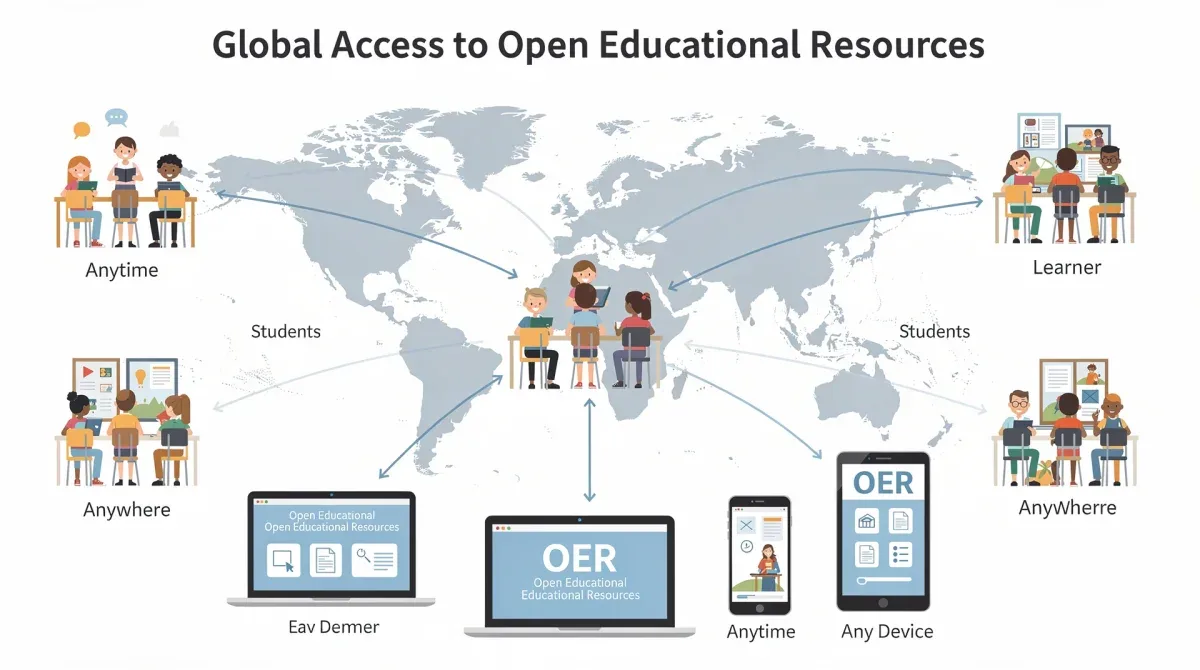
Accessibility is another cornerstone of the shift towards OER Systems Adoption. Digital OER can be accessed anytime, anywhere, on multiple devices, catering to the diverse needs of online learners. This flexibility is paramount for students balancing work, family, and academic responsibilities.
OER materials can also be adapted to meet various learning styles and accessibility requirements, including screen readers and other assistive technologies. This ensures that a wider range of students can engage effectively with the content, fostering a more inclusive and supportive learning environment. The move directly supports the mission of accredited online colleges.
Anúncios
The ability to update content rapidly is also a significant advantage over print textbooks, which quickly become outdated. OER allows for real-time revisions, incorporating the latest research, developments, and current events directly into course materials. This keeps the curriculum fresh and relevant, a key benefit of OER Systems Adoption.

Impact on Educational Quality and Innovation
The transition to OER Systems Adoption is not solely about cost savings; it also presents significant opportunities for enhancing educational quality and fostering innovation within online college programs. Educators are empowered to become curators and creators of content, tailoring materials to specific learning objectives. This bespoke approach can lead to more engaging and effective instruction, directly benefiting students.
Furthermore, the collaborative nature of OER encourages faculty to share and adapt resources, fostering a culture of continuous improvement and pedagogical exchange. This open ecosystem allows for rapid iteration and refinement of educational content, far beyond what is possible with proprietary textbooks. The impact on curriculum development is profound.
The flexibility of OER also supports diverse teaching methodologies, including project-based learning, problem-based learning, and flipped classroom models. This adaptability ensures that accredited online colleges can remain at the forefront of educational innovation, providing cutting-edge learning experiences. The shift facilitates a dynamic academic environment, further strengthening OER Systems Adoption.
Faculty Empowerment and Curriculum Customization
OER Systems Adoption provides faculty with unprecedented control over their course materials, moving beyond the limitations of publisher-dictated content. Educators can select, adapt, and even create resources that perfectly align with their instructional goals and student needs. This level of customization ensures a more relevant and impactful learning experience.
This empowerment fosters a sense of ownership and creativity among instructors, leading to more innovative course designs and teaching strategies. They can integrate multimedia, interactive exercises, and current case studies directly into their OER, making learning more engaging. The ability to customize content is a core advantage.
- Greater alignment between course objectives and learning materials.
- Opportunities for faculty to contribute to the OER community.
- Enhanced pedagogical flexibility and innovative teaching methods.
Challenges and Considerations in the Transition
While the benefits of OER Systems Adoption are clear, the transition from traditional textbooks is not without its challenges. Institutions must invest in professional development for faculty, equipping them with the skills to find, evaluate, adapt, and create OER. This requires a significant commitment of resources and time to ensure a smooth transition.
Ensuring the quality and reliability of OER materials is another critical consideration. While many OER are peer-reviewed and high-quality, faculty must be diligent in their selection and adaptation processes. Establishing clear guidelines and support systems for OER evaluation is essential for maintaining academic standards. This oversight is crucial for successful OER Systems Adoption.
Technological infrastructure also plays a vital role. Online colleges must ensure their learning management systems (LMS) and other digital platforms can seamlessly integrate OER. Robust technical support is necessary to address any issues that may arise during implementation, ensuring uninterrupted access for students and faculty as they phase out traditional textbooks for OER Systems.
Case Studies and Success Stories in OER Systems Adoption
Across the United States, numerous accredited online colleges are demonstrating the successful implementation of OER Systems Adoption, providing valuable case studies for other institutions considering the transition. These success stories highlight the tangible benefits, from significant student savings to improved learning outcomes. Their experiences offer practical insights.
For example, some institutions have reported millions of dollars in student savings within just a few years of widespread OER adoption. These colleges often leverage grants and internal funding to support faculty in their OER development efforts. Their commitment shows a clear path for others to follow, demonstrating why 32% of accredited online colleges are phasing out traditional textbooks for OER Systems.
These pioneering colleges also emphasize the importance of a phased approach, starting with high-enrollment courses and gradually expanding OER usage across the curriculum. Their strategies often involve dedicated OER coordinators and robust training programs, ensuring smooth integration and faculty buy-in. These models are crucial for effective OER Systems Adoption.
The Future Landscape of Digital Education and OER
The trend of OER Systems Adoption is poised to continue its upward trajectory, fundamentally reshaping the future landscape of digital education. As technology advances and online learning becomes even more prevalent, the demand for flexible, affordable, and accessible learning materials will only grow. This ensures OER will play an increasingly central role.
Further innovations in OER development, including interactive simulations, virtual labs, and adaptive learning modules, are expected to enhance the richness and effectiveness of these resources. The integration of artificial intelligence and data analytics with OER platforms could also personalize learning experiences to an unprecedented degree. The future of OER is dynamic.
Policymakers and educational leaders are increasingly recognizing the strategic importance of OER, potentially leading to greater funding and support for OER initiatives at state and national levels. This broader recognition will further accelerate the rate at which accredited online colleges are phasing out traditional textbooks for OER Systems, solidifying its position as a cornerstone of modern education.
| Key Point | Brief Description |
|---|---|
| Cost Savings | Eliminating traditional textbook costs significantly reduces student expenses and debt. |
| Enhanced Accessibility | OER provides free, immediate access to materials for all students, anytime, anywhere. |
| Pedagogical Flexibility | Faculty can customize and update content, fostering innovative teaching methods. |
| Institutional Support | Colleges are investing in training and infrastructure for successful OER integration. |
Frequently Asked Questions About OER Systems Adoption
What does OER stand for?▼OER stands for Open Educational Resources. These are freely accessible, openly licensed instructional materials that can be used, adapted, and shared by educators and students without cost. They encompass textbooks, videos, lectures, and more, driving the shift in accredited online colleges.
Why are colleges adopting OER Systems?▼Colleges are increasingly adopting OER Systems primarily to reduce student costs, enhance accessibility to learning materials, and provide faculty with greater flexibility in customizing curriculum. This directly addresses financial barriers and improves the overall learning experience for online students.
How does OER impact student success?▼OER positively impacts student success by ensuring all students have immediate access to required course materials from day one, regardless of their financial situation. This can lead to improved engagement, better academic performance, and higher retention rates, supporting Why 32% of Accredited Online Colleges Are Phasing Out Traditional Textbooks for OER Systems.
Are OER materials as high quality as traditional textbooks?▼Many OER materials undergo peer review and are developed by experienced educators, ensuring high quality. While quality can vary, institutions adopting OER often implement rigorous evaluation processes to select reliable and effective resources. Faculty play a key role in curating and adapting these materials.
What are the main challenges in implementing OER?▼Key challenges include providing adequate faculty training for OER development and integration, ensuring consistent quality control of resources, and having robust technological infrastructure to support seamless access. Overcoming these hurdles is crucial for successful OER Systems Adoption in accredited online colleges.
Looking Ahead: The Evolution of Online Learning
The pronounced trend of Why 32% of Accredited Online Colleges Are Phasing Out Traditional Textbooks for OER Systems signifies a pivotal moment for higher education. This shift is not merely a transient development but a foundational change in how learning resources are conceived, distributed, and utilized. It underscores a collective institutional commitment to making education more equitable and responsive to modern student needs.
As this momentum builds, the integration of OER Systems Adoption will likely drive further innovations in instructional design and digital pedagogy. Future developments will focus on enhancing interactive elements, incorporating adaptive learning technologies, and fostering richer collaborative content creation among educators. The long-term implications point towards a more dynamic and student-centric educational ecosystem.
Stakeholders, including students, faculty, and administrators, will need to remain engaged as these systems evolve. Monitoring the effectiveness of OER in diverse academic contexts and continuing to invest in supporting infrastructure will be crucial. This ongoing evolution will define the next chapter for accredited online colleges and the broader landscape of digital learning.