Dual Enrollment vs. AP: Credit Transfer Success Rates
Anúncios
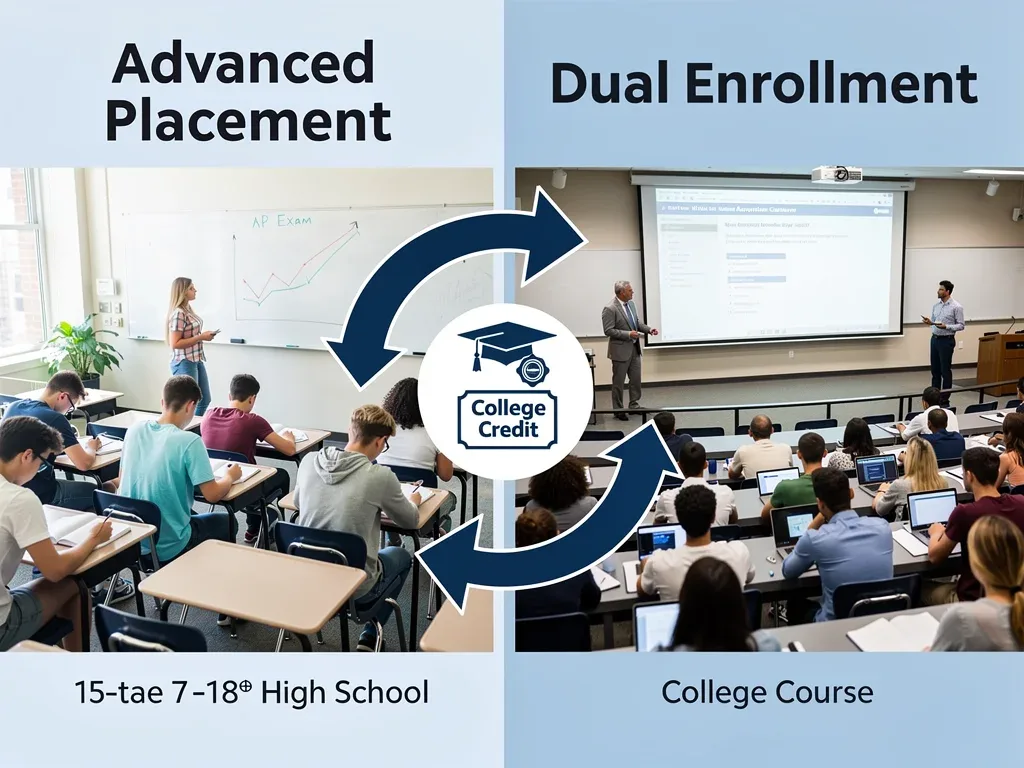
Evaluating Dual Enrollment vs. AP courses is one of the most critical decisions high school students make when planning their path to higher education.
Choosing between concurrent college enrollment and standardized Advanced Placement exams directly impacts how effectively your early coursework transforms into transferable degree credits.
While high-level Advanced Placement courses depend on high-stakes end-of-year testing for credit recognition, dual-credit university programs often offer direct transcript acceptance at four-year institutions. Navigating these differing acceptance policies ensures families maximize tuition savings and secure advanced academic standing before stepping onto campus.
Discover the latest college credit acceptance rates, institutional transfer policies, and strategic preparation advice for high schoolers. Master these secondary-to-postsecondary pathways to build a cost-effective, successful road to your undergraduate degree.
Understanding Dual Enrollment and Advanced Placement
Dual Enrollment (DE) programs allow high school students to take college courses, often at a local college or university, earning both high school and college credit simultaneously. These courses are typically taught by college faculty or by qualified high school teachers, following a college curriculum and grading system.
Anúncios
Advanced Placement (AP) courses are high school classes that follow a standardized curriculum developed by the College Board. At the end of the course, students take an AP exam, and a sufficiently high score can earn them college credit or advanced placement in college courses.
The primary goal for students in both programs is to get a head start on their college education, potentially reducing future tuition costs and time to graduation. However, the success of credit transfer is not uniform across all institutions or programs.
Credit Transfer Mechanisms: DE vs. AP
The mechanism for credit transfer differs substantially between Dual Enrollment and Advanced Placement. Dual Enrollment credits are typically awarded directly by the college offering the course, making them actual college credits earned on a college transcript.
Advanced Placement credits, conversely, are contingent upon a student's performance on a standardized AP exam. Colleges establish their own policies regarding the minimum AP score required for credit, and these policies can vary widely even for the same subject.
This fundamental difference often leads to varying levels of acceptance and applicability at four-year institutions. Understanding these distinct pathways is essential for students planning their academic future.
Dual Enrollment Credit Transfer
Credits are recorded on an official college transcript, often making them more readily accepted.
Direct articulation agreements between high schools and colleges can facilitate smoother transfers.
The quality and accreditation of the institution offering the dual enrollment course can impact transferability.
Many four-year colleges tend to view Dual Enrollment credits as direct college coursework, which can sometimes lead to higher acceptance rates compared to AP scores. This is particularly true if the DE course is taken at an accredited institution that has existing articulation agreements with the receiving four-year college.
However, even with direct college credits, transferability is not always guaranteed. Some highly selective universities may still scrutinize DE courses, especially if they are not deemed rigorous enough or if the student did not perform exceptionally well.
Anúncios
Advanced Placement Credit Transfer
Credit awarded based on a standardized exam score, typically 3, 4, or 5 out of 5.
Policies vary significantly by institution and even by department within a university.
Some colleges use AP scores for placement into higher-level courses rather than direct credit.
AP credit transfer can be more unpredictable. A score of 3 on an AP exam might be accepted at one institution for credit, while another might require a 4 or even a 5.
Furthermore, some universities cap the number of AP credits a student can transfer, or only allow AP scores to fulfill general education requirements rather than major-specific courses.
The College Board provides data on AP credit policies for thousands of colleges, allowing students to research specific institutional requirements. Despite its variability, AP remains a popular choice due to its widespread availability and standardized curriculum.
Comparing 4-Year College Credit Transfer Success Rates
Recent studies and institutional data indicate varying success rates for transferring credits from Dual Enrollment and Advanced Placement programs to four-year colleges. While both aim to provide a head start, the practical outcomes for students can differ considerably.
One key factor influencing these rates is the specific policies of the receiving institution. Highly selective universities often have more stringent requirements for accepting both DE and AP credits, prioritizing their own curriculum and assessment standards.
Conversely, state universities and less selective institutions may have more liberal policies, especially for general education requirements. This makes it challenging to provide a universal comparison without considering the student's target colleges.
Dual Enrollment's Transfer Advantage
Research from organizations like the Community College Research Center (CCRC) suggests that Dual Enrollment credits often have a higher transfer success rate. This is largely because they are already recorded on a college transcript, signifying actual college-level work completed.
According to a 2017 study by the National Student Clearinghouse Research Center, students who participate in Dual Enrollment are more likely to enroll in college and persist in their studies. While not directly measuring transfer success, this persistence suggests a smoother transition for DE students.
Many state university systems have established clear articulation agreements with local community colleges, making DE credit transfer relatively straightforward within those systems. This predictability is a significant advantage for students planning to attend in-state public universities.
AP's Variable Transfer Landscape
The transfer success of Advanced Placement credits is often more varied, depending heavily on the specific AP exam score and the receiving institution's policy. While a high score (typically a 4 or 5) is widely accepted, a score of 3 can be a gamble.
A 2019 report by the College Board indicated that over 90% of four-year colleges and universities in the U.S. grant credit or advanced placement for qualifying AP exam scores. However, the definition of 'qualifying' can be the critical differentiator.
Students often find that while AP credits might satisfy general education requirements, they are less frequently accepted for core major courses, especially in highly specialized fields. This can mean students still need to take introductory courses in their major, even with high AP scores.
Factors Influencing Credit Transfer Outcomes
Several factors contribute to the ultimate success of credit transfer, regardless of whether a student participates in Dual Enrollment or Advanced Placement. These elements are crucial for students to consider during their high school academic planning.
The type of institution a student plans to attend plays a significant role. Highly selective private universities often have more restrictive credit transfer policies than public state universities.
Furthermore, the specific academic discipline can influence credit acceptance. STEM fields, for instance, may have different transfer policies than humanities or social sciences.
Institutional Policies and Accreditation
Each four-year college sets its own policies for accepting DE and AP credits.
Accreditation of the institution offering Dual Enrollment courses is paramount for credit recognition.
Public universities within the same state often have more consistent transfer policies.
The accreditation of the institution where Dual Enrollment courses are taken is non-negotiable for credit transfer. Credits from unaccredited institutions are almost universally rejected by four-year colleges. Students must verify that the college offering the DE course holds recognized accreditation.
For AP, the College Board's rigorous development process ensures a baseline quality, but colleges still retain the right to determine if an AP score aligns with their own course content and rigor. This autonomy leads to the observed variability in AP credit acceptance.
Student Performance and Course Alignment
A student's performance in a Dual Enrollment course (their grade) is a direct indicator of their mastery of the college-level material. A strong grade in a DE course typically strengthens its transferability.
For AP, the exam score is the sole determinant of credit. A student might excel in an AP class but perform poorly on the exam, rendering the credit unattainable. Conversely, a student might struggle in the class but perform well on the exam, securing the credit.
The alignment of the DE or AP course content with the receiving college's curriculum is also vital. If a course is deemed too dissimilar in scope or depth, credit may be denied or only granted as elective credit.
Strategic Planning for Maximizing Credit Transfer
Given the complexities, strategic planning is essential for students aiming to maximize their college credit transfer success, whether through Dual Enrollment or Advanced Placement. Proactive research and communication are key components of this process.
Students should identify their target colleges early in their high school career. This allows them to research specific credit transfer policies for both DE and AP programs at those institutions.
Consulting with high school counselors and college admissions advisors is also critical. These professionals can offer personalized guidance based on a student's academic profile and college aspirations.
Researching College-Specific Policies
Check the official websites of target colleges for their Dual Enrollment and AP credit policies.
Look for articulation agreements between your high school or local community college and prospective four-year institutions.
Contact college admissions offices directly with specific questions about course transferability.
Many universities publish detailed AP credit policies on their admissions or registrar's websites, often broken down by subject and required score. For Dual Enrollment, students should look for transfer guides or direct articulation agreements. If these are not readily available, a direct inquiry to the admissions or transfer credit office is advisable.
Understanding these policies beforehand can help students choose which advanced courses to pursue. For instance, if a target university does not accept AP scores below a 4, a student might prioritize a Dual Enrollment course instead if available and aligned with their goals.
Guidance from Counselors and Advisors
High school guidance counselors are invaluable resources for navigating these decisions. They often have experience with previous students' transfer outcomes and can provide insights into local Dual Enrollment opportunities and AP program effectiveness.
College admissions advisors can offer definitive answers regarding their institution's policies. It's often beneficial to get written confirmation of credit acceptance, especially for Dual Enrollment courses, to avoid future misunderstandings.
This proactive engagement ensures that students are not just earning credits but earning credits that will actually count towards their degree at their chosen institution. It's about optimizing the return on investment for their academic efforts.
Financial Implications and Time to Degree
Beyond credit transfer rates, the financial implications and potential reduction in time to degree are significant considerations for students and families choosing between Dual Enrollment and Advanced Placement. Both programs offer pathways to cost savings, but the certainty of those savings can differ.
Dual Enrollment often involves paying college tuition, though many programs offer reduced rates or are fully subsidized by school districts or state initiatives. These upfront costs, if applicable, need to be weighed against the potential savings from fewer college semesters.
AP exams, conversely, have a fixed fee per exam, which can also be subsidized for eligible students. The cost-effectiveness here hinges on successfully earning credit from the exam score.
Cost Savings and Debt Reduction
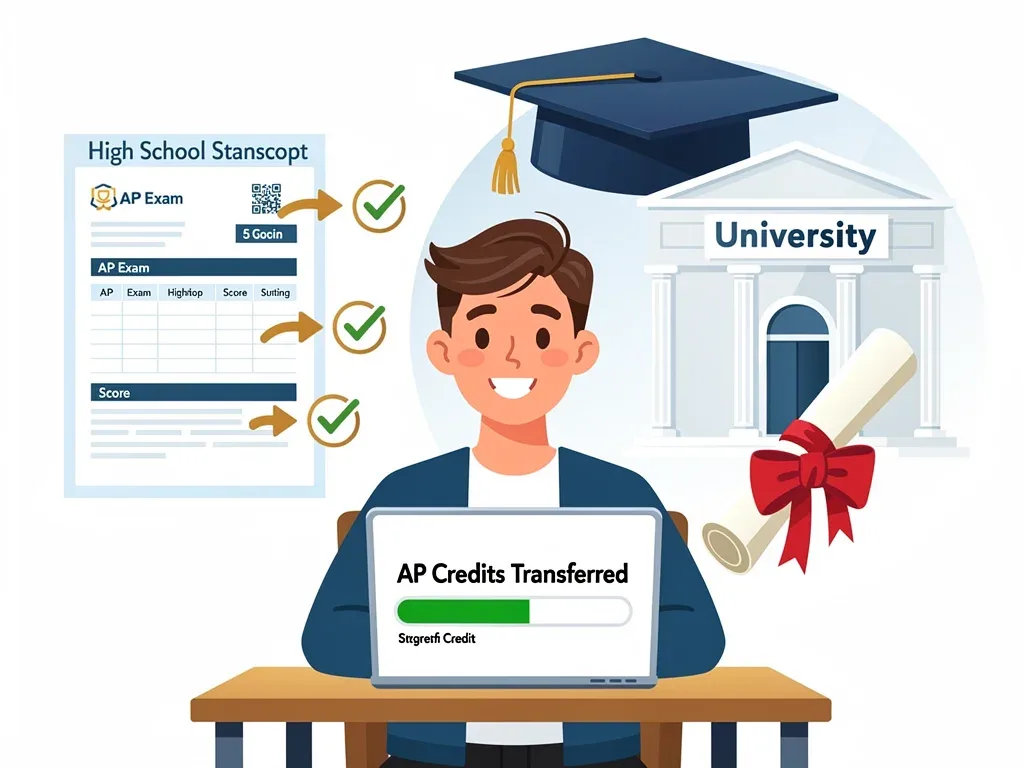
Successfully transferring DE or AP credits can lead to substantial savings on college tuition. By reducing the number of courses or semesters needed to complete a degree, students can significantly lower their overall educational expenses and potentially reduce student loan debt.
For Dual Enrollment, if a student completes a year's worth of college credits while in high school, they could potentially save tens of thousands of dollars in tuition, fees, and living expenses. This direct credit accumulation often provides a clearer financial benefit when credits successfully transfer.
AP credit savings are realized when a high score eliminates the need to take a corresponding college course. While the exam fee is relatively small, the potential saving on a three-credit college course can be hundreds or even thousands of dollars, making AP a highly cost-effective option when credit is granted.
Accelerated Degree Completion
Earning college credits in high school can also accelerate a student's path to a bachelor's degree. This can mean graduating early, pursuing a double major, or having more flexibility for internships, study abroad, or graduate school preparation.
Students with a significant number of transferable Dual Enrollment credits might even enter college as sophomores, potentially shaving a full year off their undergraduate studies. This not only saves money but also allows for an earlier entry into the workforce or graduate programs.
Similarly, AP credits can allow students to bypass introductory courses, enabling them to take more advanced or specialized courses earlier in their college career. While less likely to shave off an entire year compared to extensive DE, it certainly provides academic flexibility and momentum.
Evolving Landscape of Credit Transfer Policies
The policies governing college credit transfer are not static; they are continually evolving in response to changes in educational standards, institutional priorities, and student needs. Both Dual Enrollment and Advanced Placement programs are subject to these ongoing adjustments.
Universities frequently review their curriculum and credit acceptance guidelines, which can impact how previously earned DE or AP credits are recognized. Staying informed about these changes is crucial for current and prospective students.
State legislatures and higher education boards also play a role in shaping transfer policies, particularly for public institutions. These policy shifts can either streamline or complicate the credit transfer process.
Impact of Policy Revisions
Recent trends show some universities becoming more selective about the types of credits they accept, particularly from non-traditional sources. This can pose challenges for students relying heavily on high school-earned credits.
Conversely, some states are working to standardize transfer pathways, especially within their public university systems, to ensure greater equity and efficiency for students. These efforts can benefit Dual Enrollment participants significantly.
For AP, the College Board regularly updates its course content and exam formats, which can lead to universities re-evaluating their credit policies to ensure alignment with the latest curriculum standards. Students should always consult the most current policy information.
Future Outlook for DE and AP Credits
The future of college credit transfer success for both Dual Enrollment and Advanced Placement likely involves a continued emphasis on rigor, relevance, and clear articulation. As higher education adapts, so too will the mechanisms for recognizing prior learning.
There is a growing push for greater transparency from colleges regarding their credit transfer policies, which would greatly benefit students. Online tools and databases are becoming more sophisticated, allowing students to check credit transferability with greater ease.
Ultimately, both DE and AP remain valuable tools for ambitious high school students. Their effectiveness in achieving college credit transfer success will continue to depend on careful planning, informed decision-making, and proactive communication with prospective colleges.
Student Experiences and Outcomes
The real-world experiences of students who participate in Dual Enrollment and Advanced Placement programs offer valuable insights into their effectiveness. These personal journeys often highlight the practical challenges and successes encountered during credit transfer.
Many students report positive experiences with both programs, citing academic challenge and preparation for college-level work. However, some encounter unexpected hurdles when their earned credits are not fully recognized by their chosen four-year institution.
These outcomes underscore the importance of understanding the fine print of credit transfer policies before committing to a particular pathway.
Testimonials and Case Studies
A student who completed numerous Dual Enrollment courses at a local community college might find all their general education credits seamlessly transferred to their state university. This allows them to enter as a sophomore, directly impacting their time to degree and overall cost.
Conversely, an AP student with multiple scores of 4 might discover that their highly selective university only accepts a limited number of AP credits, or only for specific departments. This can lead to frustration and the need to retake courses they felt they had already mastered.
These varied experiences illustrate the unpredictable nature of credit transfer, especially when students aim for institutions with highly specific or unique curricular requirements.
Impact on Academic Preparedness
Beyond credit transfer, both DE and AP programs are lauded for their ability to prepare students for the academic rigor of college. Students gain exposure to college-level coursework, time management skills, and a deeper understanding of academic expectations.
Dual Enrollment, in particular, offers a direct immersion into a college environment, which can ease the transition from high school. Students learn to navigate college campuses, interact with college faculty, and manage a more independent academic schedule.
AP courses, while still within the high school setting, provide a rigorous curriculum and the challenge of a high-stakes exam, simulating the pressure of college-level assessments. Both pathways contribute significantly to a student's overall college readiness.
Key Aspect | Description |
|---|---|
Credit Type | DE offers direct college credits, AP offers potential credit via exam scores. |
Transfer Predictability | DE often more predictable, especially within state systems; AP varies greatly by institution. |
Cost Implications | DE may have tuition fees; AP has exam fees. Both offer potential tuition savings. |
Academic Rigor | Both provide college-level challenge and preparation for higher education. |
Frequently Asked Questions About College Credit Transfer
Which program, Dual Enrollment or AP, has a higher college credit transfer success rate?▼
Generally, Dual Enrollment credits often exhibit a higher transfer success rate because they are direct college credits from an accredited institution. AP credit transfer success rates are more variable, depending heavily on the specific AP exam score and the receiving university's policies, which differ widely.
Do highly selective colleges accept Dual Enrollment or AP credits more readily?▼
Highly selective colleges typically have stringent policies for both. While many accept high AP scores (4s and 5s), they might cap the number of credits or only use them for placement. Dual Enrollment credits are often evaluated based on the rigor of the course and the accreditation of the issuing college.
How can students ensure their Dual Enrollment or AP credits will transfer?▼
Students should proactively research the specific credit transfer policies of their target four-year colleges. It is advisable to consult with high school counselors and college admissions offices, ideally obtaining written confirmation of credit acceptance for specific courses or AP scores.
What are the main financial benefits of earning college credits in high school?▼
Earning college credits through Dual Enrollment or AP can significantly reduce the overall cost of a bachelor's degree by decreasing the number of semesters or courses needed. This can lead to substantial savings on tuition, fees, and living expenses, potentially lowering student loan debt.
Do these programs prepare students better for college-level work?▼
Yes, both Dual Enrollment and Advanced Placement programs are highly effective in preparing students for the academic rigor of college. They expose students to college-level material, foster critical thinking, and help develop essential study habits and time management skills necessary for success in higher education.
What this means
The ongoing discussion around Dual Enrollment vs. Advanced Placement underscores a critical need for informed decision-making by students and families.
As educational pathways continue to evolve, understanding the specific nuances of credit transfer policies at target institutions remains paramount.
This analysis highlights that while both programs offer significant benefits, the predictability and success of credit transfer can vary widely, necessitating diligent research and strategic planning to maximize academic and financial advantages for higher education.