Digital ACT vs. Redesigned SAT: 2026 Scoring Trends & Benchmarks
Anúncios
Are you struggling to determine which modern entrance exam fits your test-taking style? The head-to-head comparison between the Digital SAT vs. Redesigned SAT (and its Enhanced ACT competitor) is fundamentally altering how students approach college admissions strategies.
As testing mandates return across selective universities, understanding these updated scoring dynamics is essential for maximizing your composite results.
Recent data reveals distinct differences in adaptive module scoring, time-per-question pacing, and subject-matter weight across both testing platforms. While one assessment favors rapid processing speed and linear progression, the other rewards multi-step analytical reasoning with built-in digital tools.
Navigating these revised scoring curves and national benchmark percentiles gives applicants a clear competitive edge. Evaluating your cognitive strengths against these updated evaluation metrics ensures you target the ideal testing format to reach your target score.
Understanding the Shift to Digital Standardized Testing
The landscape of college admissions is undergoing a significant transformation with both the ACT and SAT moving towards digital formats. This shift introduces new variables that will inevitably influence scoring trends and national benchmark performance for the 2026 cohort.
Anúncios
Students, educators, and institutions across the United States are closely observing these developments to adapt strategies for test preparation and evaluation. The move aims to enhance accessibility, security, and the overall testing experience for millions of high school students.
Understanding the nuances of these digital transitions is crucial for anyone involved in the college application process. The changes are not merely cosmetic but impact how content is delivered, how questions are structured, and ultimately, how scores are interpreted.
Key Changes in the Digital ACT and Redesigned SAT
The transition to digital platforms brings fundamental alterations to the structure and administration of both the ACT and SAT. These changes extend beyond simply moving from paper to screen, affecting pacing, question types, and adaptive mechanisms.
For the Digital ACT, the primary change is its computer-based delivery, offering a more streamlined experience with instant scoring for multiple-choice sections. This contrasts with the paper-and-pencil format that many students are accustomed to.
The Redesigned SAT, now fully digital, also features an adaptive testing model, meaning the difficulty of subsequent questions adjusts based on a student's performance. This dynamic approach aims to provide a more precise measure of ability in a shorter testing time.
Digital ACT Format and Content Adjustments
The Digital ACT maintains its four core sections: English, Math, Reading, and Science, with an optional Writing test.
While the content remains largely consistent, the digital interface allows for new question types and interactive elements.
The shift includes computer-adaptive testing for some sections, providing a more tailored assessment experience.
These format adjustments for the Digital ACT are designed to align with modern educational practices and student preferences. The goal is to make the test more engaging and reflective of skills needed in a digital world.
Redesigned SAT Adaptive Testing Model
The Redesigned SAT is fully digital and significantly shorter, taking about two hours instead of three.
It features an adaptive design, where performance on early modules determines the difficulty of later modules.
This adaptive nature means that each student's test experience is uniquely tailored, leading to a more efficient and potentially more accurate score.
The adaptive model of the Redesigned SAT represents a substantial departure from its traditional format. This innovation aims to reduce testing fatigue while still providing comprehensive data to colleges and universities.
Anúncios
Analyzing 2026 Scoring Trends and Predictions
The introduction of digital formats for both tests is expected to influence scoring trends significantly by 2026. Initial data and expert analyses suggest potential shifts in average scores and percentile distributions.
Predicting precise scoring trends involves considering factors like student familiarity with digital interfaces, the impact of adaptive testing, and changes in test preparation strategies. These elements will collectively shape the national benchmark performance.
Early indicators suggest that students who are comfortable with technology and possess strong digital literacy skills might find the new formats more intuitive. Conversely, those less accustomed to digital environments may face initial challenges.
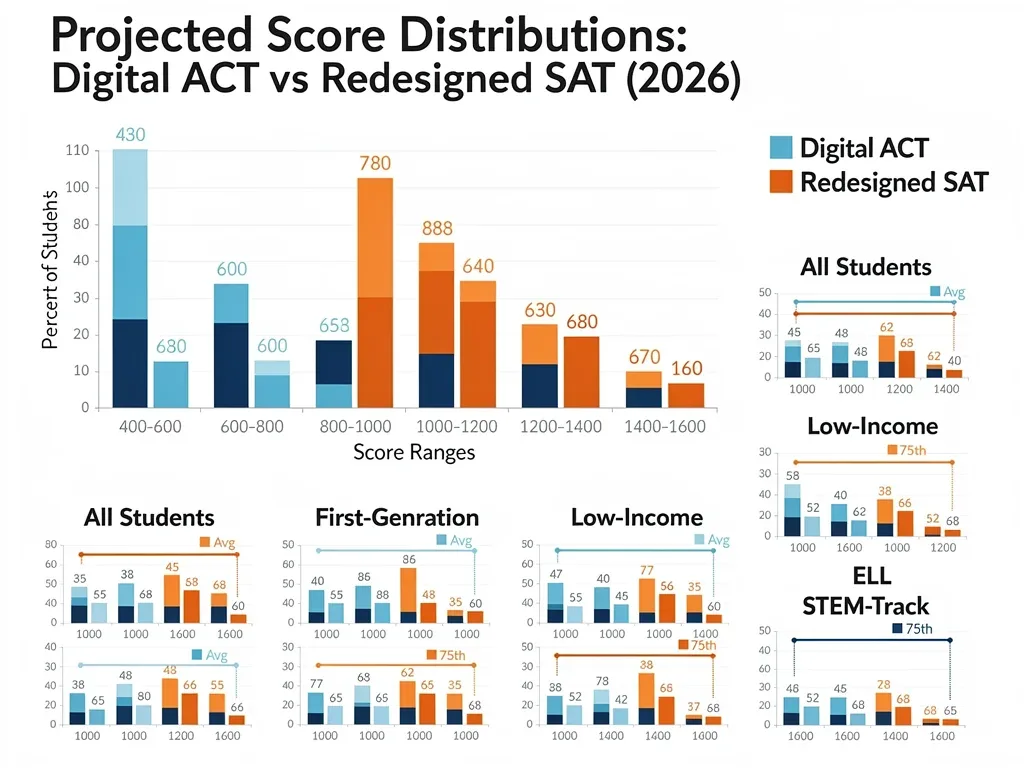
Anticipated Changes in Average Scores
With the Digital ACT, the move to online delivery could lead to minor fluctuations in average scores as students adjust to the new environment. The potential for instant feedback on practice tests might also contribute to improved preparation.
For the Redesigned SAT, the adaptive model could result in a tighter distribution of scores, as the test becomes more efficient at pinpointing a student's true ability. This could mean fewer extreme scores on either end of the spectrum.
These changes in average scores will be closely monitored by educational researchers and institutions to understand their implications for college admissions and scholarship opportunities.
Impact on National Benchmark Performance
National benchmark performance for both tests will likely see adjustments as the digital formats become standard. Colleges will need to recalibrate their understanding of what constitutes a competitive score.
The new benchmarks will reflect not only academic proficiency but also a student's ability to navigate digital testing environments. This broader assessment could influence how colleges view applicant profiles.
Moreover, the availability of more detailed analytics from digital tests could provide richer data for national benchmark comparisons, leading to more nuanced interpretations of student performance.
Preparing for the Digital ACT and Redesigned SAT in 2026
Effective preparation for the Digital ACT and Redesigned SAT in 2026 requires a focused approach that accounts for the new digital formats. Students need to familiarize themselves with the online interfaces and adaptive testing mechanics.
Test preparation companies and educational institutions are already developing resources tailored to these digital changes. Accessing these materials will be crucial for students aiming for optimal performance.
Beyond content review, practicing with digital simulations and understanding the timing and navigation of the online platforms will be key to success. This proactive preparation will help mitigate any potential disadvantages.
Strategies for Digital Test Familiarization
Engage with official practice tests provided by ACT and College Board in their digital formats.
Utilize online tutorials and guides that explain the features and functionalities of the digital platforms.
Practice typing skills and digital navigation, as these will be essential for efficient test completion.
Familiarity with the digital environment can significantly reduce test-day anxiety and allow students to focus solely on the content. This is a critical component of successful preparation for the Digital ACT vs. Redesigned SAT.
Adapting Test Preparation Resources
Seek out test preparation materials specifically designed for the digital versions of the ACT and SAT.
Focus on understanding the adaptive nature of the Redesigned SAT and how it impacts question strategy.
Leverage online platforms that offer diagnostic assessments and personalized study plans based on digital test performance.
The evolution of test preparation resources is paramount to supporting students through this transition. Educators and parents should ensure that students have access to up-to-date and relevant materials for the Digital ACT vs. Redesigned SAT.
Implications for College Admissions and Scholarships
The shift to digital testing for the ACT and SAT will have significant implications for college admissions and scholarship processes. Institutions will need to adjust their evaluation criteria to account for the new scoring trends and benchmarks.
Admissions committees will closely analyze the inaugural digital scores to understand how they compare to historical data from paper-based tests. This period of adjustment will be critical for equitable evaluations.
Furthermore, scholarship organizations will also need to update their eligibility requirements and scoring thresholds to reflect the new testing realities. The competitive landscape for scholarships may also see shifts.
Adjusting College Admissions Criteria
Colleges are likely to adopt a flexible approach initially, potentially looking at a broader range of factors beyond just test scores during this transitional period. Transparency from test developers will be vital for informed decision-making.
The emphasis on holistic review processes may intensify as admissions officers seek to understand student capabilities in a more comprehensive manner. This could benefit students with diverse strengths.
Ultimately, the goal is to ensure fairness and accuracy in evaluating applicants, regardless of the test format. The college admissions cycle for 2026 will be a key period for observing these adjustments.
Scholarship Eligibility and Competition
Scholarship providers will need to clearly communicate any changes to their scoring requirements or preferences for the Digital ACT vs. Redesigned SAT. Students should proactively check for updated guidelines.
The competitive nature of scholarships might shift if the new digital formats lead to different score distributions or impact specific demographic groups disproportionately. Awareness of these trends is crucial.
Students should focus on presenting a strong overall application, including academic transcripts, extracurricular activities, and essays, to maximize their chances for scholarships in this evolving environment.
Educator Perspectives on Digital ACT and Redesigned SAT
Educators play a pivotal role in guiding students through the transition to digital standardized tests. Their insights and feedback are essential for understanding the practical challenges and opportunities presented by the new formats.
Many educators are actively seeking professional development to familiarize themselves with the Digital ACT and Redesigned SAT. This ensures they can effectively prepare students and interpret scores accurately.
The pedagogical implications of digital testing are also being explored, with discussions on how teaching methods might need to adapt to align with the skills assessed by these modern examinations.
Challenges and Opportunities for Teachers
Teachers face the challenge of integrating digital test preparation into an already demanding curriculum. Ensuring all students have equitable access to technology and digital literacy training is a significant concern.
However, the digital format also presents opportunities for more personalized instruction. Data analytics from digital practice tests can help teachers identify specific areas where students need additional support, enhancing targeted interventions.
Collaboration among educators and with test developers will be crucial to navigating these challenges and maximizing the opportunities presented by the Digital ACT vs. Redesigned SAT.
Curriculum Alignment with Digital Assessments
There is an ongoing discussion about how school curricula can better align with the demands of the Digital ACT and Redesigned SAT. This involves emphasizing critical thinking, problem-solving, and digital fluency.
Curriculum developers are reviewing existing standards to ensure they adequately prepare students for the types of questions and cognitive skills assessed by the new digital tests. This alignment is vital for student success.
Ultimately, the goal is to create a seamless educational experience where classroom learning directly translates into strong performance on these important standardized examinations.
Equity and Access in the Digital Testing Era
The move to digital testing raises important questions about equity and access for all students. Ensuring that every student has the necessary technology and internet connectivity is a critical consideration for the Digital ACT vs. Redesigned SAT.
Disparities in access to technology and digital literacy can exacerbate existing achievement gaps if not adequately addressed. Test developers and schools are working to implement solutions to mitigate these issues.
Providing accommodations for students with disabilities in a digital environment also requires careful planning and execution to ensure fairness and equal opportunity for all test-takers.
Addressing Digital Divide Concerns
Schools and communities are exploring initiatives to provide devices and internet access to students from underserved backgrounds.
Test centers are being equipped with reliable technology and backup systems to prevent disruptions during examinations.
Efforts are underway to ensure that the digital platforms are user-friendly and accessible to students with varying levels of digital proficiency.
Addressing the digital divide is paramount to ensuring that the shift to digital testing does not disadvantage any student. This commitment to equity is a cornerstone of fair standardized testing.
Ensuring Accommodations for All Students
Test developers are working to integrate robust accessibility features into the digital testing platforms for students with disabilities.
Schools are being trained on how to properly administer digital accommodations, such as extended time and screen readers.
Clear guidelines are being established to ensure consistency and fairness in providing accommodations across all test sites.
The provision of appropriate accommodations is a legal and ethical imperative. The digital format offers new possibilities for personalized accommodations, but careful implementation is key for the Digital ACT vs. Redesigned SAT.
The Future Landscape of Standardized Testing Beyond 2026
Looking beyond 2026, the landscape of standardized testing will continue to evolve, driven by technological advancements and changing educational philosophies. The digital transformation is just one step in a longer journey.
Discussions are ongoing regarding the role of standardized tests in college admissions, with some institutions moving towards test-optional policies. However, the Digital ACT vs. Redesigned SAT remains a significant factor for many.
Future innovations might include even more personalized testing experiences, real-time feedback mechanisms, and potentially a greater integration with high school curricula to provide a more holistic assessment of student learning.
Innovation and Personalization in Testing
The digital format opens doors for greater innovation, such as incorporating multimedia elements and interactive simulations into tests. This could make assessments more dynamic and engaging for students.
Personalized testing could involve adaptive pathways that not only adjust difficulty but also tailor content to a student's individual learning style or areas of interest, making the assessment experience more relevant.
These advancements aim to move beyond traditional, one-size-fits-all testing models towards more nuanced and effective measures of student aptitude and achievement.
Evolving Role in College Admissions
The role of standardized tests in college admissions will continue to be debated and refined. While some argue for their diminished importance, others see them as a crucial, objective measure.
The data richness provided by digital tests could lead to new ways colleges use scores, perhaps combining them with other metrics to create a more comprehensive applicant profile. This could enhance the utility of the Digital ACT vs. Redesigned SAT.
Ultimately, the future will likely see a more integrated approach, where standardized tests serve as one important piece of a larger, multi-faceted evaluation process for college-bound students.
Key Point | Brief Description |
|---|---|
Digital Transition | Both ACT and SAT are moving to fully digital formats by 2026. |
Scoring Trends | Anticipated shifts in average scores and percentile distributions due to new formats. |
Preparation Focus | Emphasis on digital literacy and practice with adaptive testing platforms. |
Equity & Access | Addressing digital divide and ensuring accommodations for all students. |
Frequently Asked Questions About Digital ACT vs. Redesigned SAT
How will the digital format impact test-day experience for students?▼
The digital format aims to offer a more streamlined and secure test-day experience. Students will take the test on a computer or tablet, potentially reducing issues like smudged answer sheets. The Redesigned SAT's adaptive nature means shorter test times, which could reduce fatigue and improve focus for many students.
Will colleges view Digital ACT and Redesigned SAT scores differently than past scores?▼
Colleges are expected to adjust their interpretation of scores as new benchmarks emerge. While the core academic skills assessed remain similar, the different testing methodologies might lead to slight recalibrations. Admissions offices will likely receive guidance from test developers to ensure fair comparison with previous years' scores.
What are the main advantages of these digital transitions?▼
Key advantages include increased test security, faster score reporting, and enhanced accessibility features. The adaptive nature of the Redesigned SAT also allows for a more efficient and precise measurement of student ability, potentially reducing testing time without sacrificing reliability. This modernization benefits both test-takers and institutions.
How can students prepare effectively for the adaptive Redesigned SAT?▼
Effective preparation involves familiarizing oneself with the digital platform and understanding the adaptive testing logic. Students should utilize official practice tests that replicate the adaptive experience. Focusing on foundational skills in math and reading, combined with strategic practice, will be more beneficial than rote memorization.
What support is available for schools in addressing the digital divide for these tests?▼
Test developers and educational organizations are collaborating to provide resources and support for schools. This includes guidance on securing devices, ensuring internet access, and offering training for staff. Many initiatives aim to bridge the digital divide, ensuring all students have equitable opportunities to succeed on the Digital ACT vs. Redesigned SAT.
What this means
The transition to digital formats for both the ACT and SAT marks a pivotal moment in standardized testing, with significant implications for Digital ACT vs. Redesigned SAT.
Stakeholders must remain informed about evolving scoring trends, adapt preparation strategies, and address equity concerns to ensure a smooth transition. The coming years will reveal the full impact of these changes on college admissions and student trajectories.