2026 Pell Grant Course Load: Full-Time Community College Guide
Anúncios
The latest developments on Understanding the 2026 Pell Grant Course Load Requirements for Full-Time Community College Students are emerging, with key facts, verified sources, and what readers need to monitor next in the United States, presented clearly.
Understanding the 2026 Pell Grant Course Load Requirements for Full-Time Community College Students is shaping today’s agenda with new details released by federal education officials. This update prioritizes what changed, why it matters, and what to watch next, in a straightforward news format for prospective and current students.
The shift in Pell Grant regulations aims to streamline financial aid processes and ensure equitable access for eligible students. These changes will particularly impact those attending community colleges full-time, necessitating a clear understanding of the evolving criteria.
Students and academic advisors must prepare for these adjustments, which are designed to enhance the effectiveness of federal financial aid. Staying informed on these developments is crucial for maximizing educational opportunities and avoiding potential disruptions to funding.
Understanding the New Pell Grant Framework for 2026
The U.S. Department of Education has initiated significant changes to the Pell Grant program, set to take full effect by the 2026-2027 academic year. These revisions are part of a broader effort to simplify the Free Application for Federal Student Aid (FAFSA) and expand eligibility for federal student aid programs.
Anúncios
Central to these changes is a refined definition of what constitutes a full-time course load, particularly for community college students. This new framework seeks to align federal aid more closely with academic progress and student success metrics, which is vital for Understanding the 2026 Pell Grant Course Load Requirements for Full-Time Community College Students.
The goal is to ensure that federal funds are distributed efficiently and effectively, supporting students who are committed to completing their degrees or certificates. Stakeholders across the higher education landscape are actively analyzing the implications of these forthcoming regulations.
Key Legislative Changes Impacting Pell Grants
The FAFSA Simplification Act, enacted as part of the Consolidated Appropriations Act of 2021, is the driving force behind these upcoming changes. This legislation mandates a series of reforms aimed at making the financial aid application process less daunting and more accessible for millions of students.
One of the most significant shifts involves the calculation of the Student Aid Index (SAI), which replaces the Expected Family Contribution (EFC). This new methodology is designed to provide a more accurate assessment of a student's financial need, directly influencing Pell Grant award amounts.

These legislative changes directly inform Understanding the 2026 Pell Grant Course Load Requirements for Full-Time Community College Students, as they redefine the parameters of eligibility and funding. The Department of Education is providing guidance to institutions to ensure a smooth transition.
Defining Full-Time Enrollment for 2026 Pell Eligibility
For community college students, the definition of a full-time course load is paramount to Pell Grant eligibility. While the traditional standard often involves 12 credit hours per semester, the 2026 regulations emphasize sustained academic engagement and satisfactory academic progress (SAP).
The new guidelines will likely reinforce the importance of students maintaining a consistent enrollment status throughout their academic year. Institutions will play a key role in communicating these specific requirements to their student populations, impacting Understanding the 2026 Pell Grant Course Load Requirements for Full-Time Community College Students.
Anúncios
Students are encouraged to work closely with their academic advisors to ensure their course schedules meet both institutional and federal financial aid stipulations. This proactive approach will help prevent any unforeseen issues with their Pell Grant disbursements.
Impact on Community College Students and Institutions
The impending changes to Pell Grant course load requirements are expected to have a multifaceted impact on community college students and the institutions they attend. These effects will range from administrative adjustments to direct financial implications for students.
Community colleges, which serve a large population of Pell Grant recipients, are preparing to adapt their advising and enrollment services. Ensuring students comprehend the new rules is a top priority to maintain access to crucial financial support, central to Understanding the 2026 Pell Grant Course Load Requirements for Full-Time Community College Students.
The adjustments will require robust communication strategies from colleges to inform students about how their enrollment choices directly affect their federal aid. This proactive outreach is essential for minimizing confusion and maximizing student success.
Administrative Adjustments for Community Colleges
Community college financial aid offices face the task of integrating the new Pell Grant regulations into their existing systems. This includes updating software, training staff, and revising internal policies to align with federal mandates.
These administrative adjustments are critical for accurately processing Pell Grant awards and ensuring compliance. Institutions must also develop clear resources and workshops to help students navigate the updated requirements, impacting Understanding the 2026 Pell Grant Course Load Requirements for Full-Time Community College Students.
The transition period will be vital for colleges to fine-tune their processes and address any unforeseen challenges that may arise. Collaboration between various departments within the college will be essential for a seamless implementation.
Financial Implications for Students
For many full-time community college students, Pell Grants represent a cornerstone of their financial stability while pursuing higher education. The 2026 changes could alter award amounts, making it imperative for students to understand how their course load directly affects their aid.
Students may find that maintaining a specific number of credit hours or demonstrating consistent academic progress becomes even more crucial for receiving their full grant eligibility. This emphasizes the importance of Understanding the 2026 Pell Grant Course Load Requirements for Full-Time Community College Students.
It is advisable for students to regularly check their financial aid status and consult with financial aid advisors to understand any personalized impacts. Proactive engagement will be key to securing necessary funding.
Navigating Eligibility and Application Updates
Navigating the updated eligibility criteria and application processes for the 2026 Pell Grant will require careful attention from students and their families. The reforms aim to simplify FAFSA, but understanding the underlying changes is still essential.
The new Student Aid Index (SAI) calculation is a significant departure from the previous Expected Family Contribution (EFC). Students will need to familiarize themselves with how their financial information will be assessed under this new system, which is crucial for Understanding the 2026 Pell Grant Course Load Requirements for Full-Time Community College Students.
Furthermore, the application timeline and required documentation may see subtle shifts. Staying informed through official channels and institutional guidance will be paramount to a successful application experience.
The Role of the Student Aid Index (SAI)
The Student Aid Index (SAI) is a new metric that will determine a student's eligibility for federal financial aid, including Pell Grants. Unlike the EFC, the SAI can be a negative number, indicating a higher level of financial need.
This change is intended to provide a more comprehensive and equitable assessment of a student's capacity to pay for college. The SAI calculation considers various factors, including family size, adjusted gross income, and assets, directly influencing Pell Grant awards.
Students should understand that a lower SAI generally translates to greater eligibility for federal aid. This new calculation is central to Understanding the 2026 Pell Grant Course Load Requirements for Full-Time Community College Students and their potential award amounts.
Tips for a Successful Pell Grant Application
To ensure a successful Pell Grant application for the 2026-2027 academic year, students should begin preparing well in advance. Gathering necessary financial documents, such as tax returns and bank statements, is a crucial first step.
Completing the FAFSA accurately and by the priority deadlines set by both federal and state governments, as well as individual institutions, is also vital. Any errors or delays can significantly impact aid eligibility and disbursement, impacting Understanding the 2026 Pell Grant Course Load Requirements for Full-Time Community College Students.
Students are strongly encouraged to utilize the resources available through their community college's financial aid office. These offices can provide personalized assistance and clarification on complex aspects of the application process.
Anticipated Challenges and Support Systems
While the goal of the Pell Grant reforms is to simplify and expand access, anticipated challenges may arise during the transition period. Both students and institutions will need robust support systems to navigate these changes effectively.
One potential challenge involves initial confusion surrounding the new terminology and calculation methods, particularly the shift from EFC to SAI. Clear and consistent communication from all stakeholders will be essential to mitigate this, impacting Understanding the 2026 Pell Grant Course Load Requirements for Full-Time Community College Students.
Moreover, institutions must ensure that their technological infrastructure is ready to handle the updated FAFSA data and processing requirements. Proactive engagement with federal guidance and peer institutions will be key to overcoming these hurdles.

Addressing Potential Student Confusion
To address potential student confusion, community colleges are advised to create comprehensive informational campaigns. These campaigns should leverage multiple channels, including workshops, online resources, and one-on-one counseling sessions.
Simplifying complex regulations into easily understandable language will be critical for students to grasp how their academic choices impact their financial aid. This direct communication is vital for Understanding the 2026 Pell Grant Course Load Requirements for Full-Time Community College Students.
Providing accessible points of contact for questions and concerns will empower students to seek clarification when needed. A proactive and supportive approach can significantly ease the transition for the student body.
Institutional Support and Resources
Community colleges must bolster their institutional support systems to assist students through these changes. This includes enhancing financial aid advising services, investing in staff training, and updating informational materials.
Developing partnerships with community organizations and local high schools can also extend the reach of vital information to prospective students. These collaborative efforts are crucial for ensuring broad access to accurate guidance on Understanding the 2026 Pell Grant Course Load Requirements for Full-Time Community College Students.
Furthermore, colleges should actively participate in federal webinars and training sessions to stay abreast of the latest guidance and best practices. Sharing insights and strategies with other institutions can also foster a more effective response to the reforms.
Future Outlook and Continued Monitoring
The implementation of the 2026 Pell Grant course load requirements marks a significant evolution in federal student aid. The future outlook suggests a more streamlined and potentially more equitable system, but continued monitoring will be essential.
As the changes roll out, federal agencies will likely issue further clarifications and updates. Students and institutions must remain vigilant and responsive to these ongoing developments, which directly influence Understanding the 2026 Pell Grant Course Load Requirements for Full-Time Community College Students.
The long-term success of these reforms will depend on their effectiveness in increasing access to higher education and supporting student completion. Early indicators and feedback from the initial phases of implementation will be closely watched.
Staying Informed on Policy Revisions
Staying informed on policy revisions is not a one-time task but an ongoing commitment for anyone involved in higher education financial aid. The landscape of federal funding can evolve, and prompt awareness of changes is key.
Subscribing to official newsletters from the U.S. Department of Education and relevant professional organizations is highly recommended. These resources provide timely updates and detailed explanations of new or revised regulations, impacting Understanding the 2026 Pell Grant Course Load Requirements for Full-Time Community College Students.
Attending informational webinars and workshops hosted by federal agencies or educational associations can also provide valuable insights and opportunities for direct engagement with policy experts. Proactive learning is essential.
Advocacy for Community College Students
Advocacy efforts play a crucial role in shaping financial aid policies to better serve community college students. Organizations and institutions continuously work to ensure that the unique needs of this student population are recognized and addressed in federal legislation.
These advocacy initiatives often focus on maintaining flexibility in course load definitions and ensuring adequate funding levels for Pell Grants. The collective voice of community college stakeholders is powerful in influencing policy decisions, including those related to Understanding the 2026 Pell Grant Course Load Requirements for Full-Time Community College Students.
Students themselves can also participate in advocacy by sharing their experiences and perspectives with elected officials. Their stories highlight the real-world impact of financial aid policies on educational attainment.
Preparing for the 2026 Academic Year
Preparation for the 2026 academic year, particularly concerning Pell Grant course load requirements, should begin now for both students and community college administrators. Proactive planning is the best strategy to ensure a smooth transition and maximize aid opportunities.
Students should review their academic plans and consult with advisors to confirm their chosen course loads will meet the forthcoming eligibility criteria. This early assessment is critical for Understanding the 2026 Pell Grant Course Load Requirements for Full-Time Community College Students.
Institutions, meanwhile, need to finalize their internal adjustments and communication strategies to support their student body effectively. A coordinated effort will minimize disruptions and enhance the overall student experience.
Checklist for Students
- Review current academic plan against 2026 Pell Grant full-time definitions.
- Gather all necessary financial documents for the FAFSA application.
- Consult with a financial aid advisor early to discuss individual circumstances.
- Monitor official communications from the Department of Education and your college.
By following these steps, students can confidently approach the 2026-2027 academic year with a clear understanding of their Pell Grant eligibility. This proactive stance is essential for securing vital financial support for their education.
Checklist for Community Colleges
- Update financial aid software and systems to accommodate new FAFSA and SAI calculations.
- Train financial aid staff on all revised Pell Grant regulations and advising protocols.
- Develop comprehensive communication plans to inform students about changes.
- Collaborate with academic departments to align course planning with aid requirements.
Institutions that implement these measures will be well-positioned to support their students effectively through the transition. Comprehensive preparation is key to successful implementation of the 2026 Pell Grant Course Load Requirements for Full-Time Community College Students.
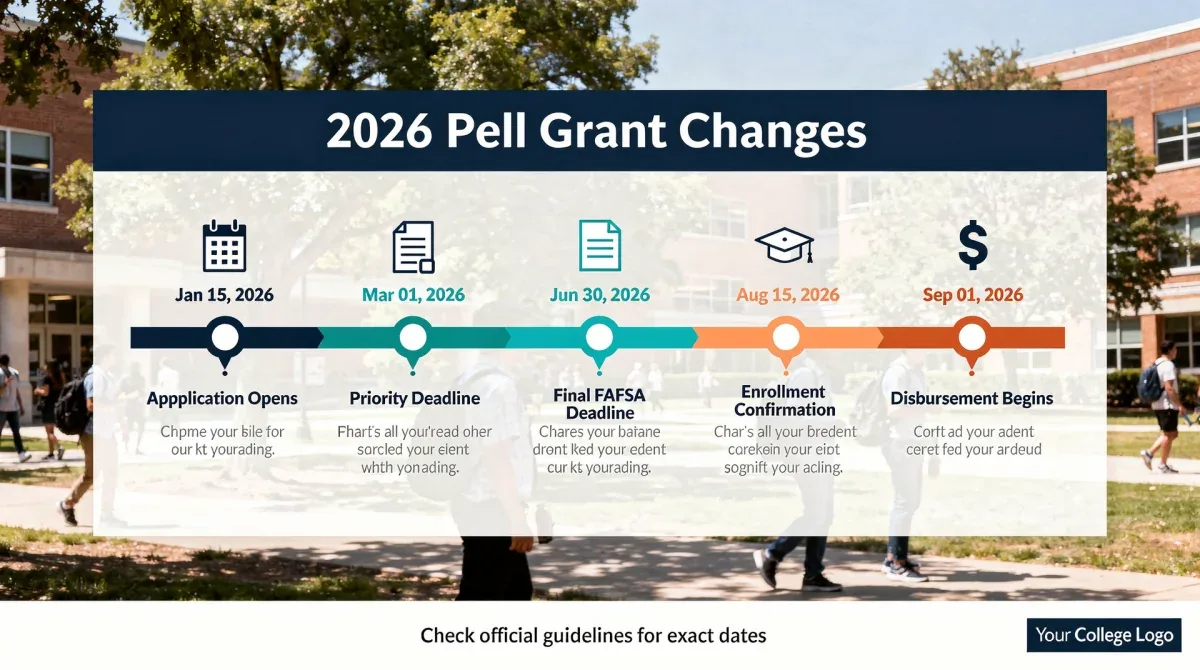
| Key Point | Brief Description |
|---|---|
| FAFSA Simplification | Streamlined application process and expanded eligibility. |
| Student Aid Index (SAI) | New metric replacing EFC for financial need assessment. |
| Full-Time Definition | Revised course load requirements for Pell Grant eligibility. |
| Institutional Readiness | Colleges must adapt systems and advise students effectively. |
Frequently Asked Questions About 2026 Pell Grant Course Load
What is the primary change for Pell Grants in 2026?▼The primary change involves the full implementation of the FAFSA Simplification Act, replacing the Expected Family Contribution (EFC) with the Student Aid Index (SAI). This new calculation method aims to provide a more accurate and equitable assessment of a student's financial need, directly impacting Pell Grant eligibility and award amounts for community college students.
How will 'full-time' enrollment be defined for Pell Grants?▼While specific credit hour requirements may vary slightly by institution, the 2026 regulations will reinforce the importance of maintaining consistent enrollment and satisfactory academic progress. Students should consult their college's financial aid office for precise definitions to ensure they meet the 2026 Pell Grant Course Load Requirements for Full-Time Community College Students.
When should community college students prepare for these changes?▼Students should begin preparing now, as the changes take full effect for the 2026-2027 academic year. This includes understanding the new FAFSA, gathering financial documents, and consulting with academic and financial aid advisors. Proactive planning is crucial for navigating the 2026 Pell Grant Course Load Requirements for Full-Time Community College Students effectively.
Will the new rules expand Pell Grant eligibility?▼Yes, the FAFSA Simplification Act, which drives these changes, is designed to expand Pell Grant eligibility for many students. The new Student Aid Index (SAI) calculation is expected to allow more students to qualify for federal aid, especially those with significant financial need, impacting Understanding the 2026 Pell Grant Course Load Requirements for Full-Time Community College Students.
Where can students find reliable information about these updates?▼Students should rely on official sources such as the U.S. Department of Education's Federal Student Aid website and their community college's financial aid office. These resources provide the most accurate and up-to-date information regarding the 2026 Pell Grant Course Load Requirements for Full-Time Community College Students, as well as application guidance and deadlines.
Looking Ahead: Ensuring Access and Success
The overhaul of the Pell Grant program for 2026 represents a pivotal moment for federal student aid, particularly for community college students. These reforms aim to democratize access to higher education, but their true impact will unfold over time.
It is imperative for students and institutions to stay engaged with ongoing updates and leverage available support systems. The success of these changes hinges on clear communication and proactive adaptation from all parties involved, critically impacting Understanding the 2026 Pell Grant Course Load Requirements for Full-Time Community College Students.
By embracing these changes and preparing diligently, the higher education community can ensure that Pell Grants continue to serve as a vital lifeline for millions seeking to achieve their academic and career aspirations.